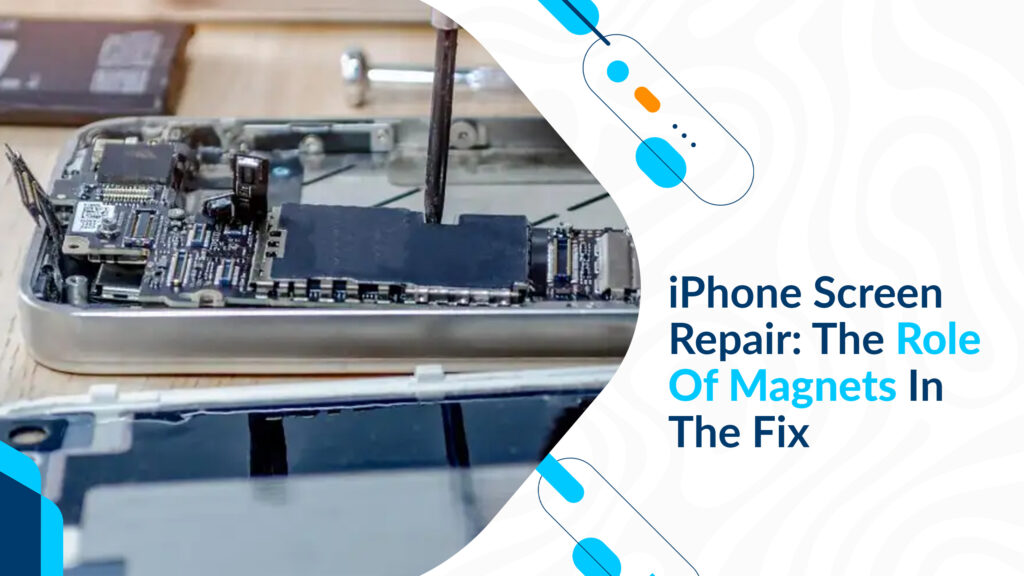
iPhone screen repair has become a common necessity as our smartphones have become integral to our daily lives. One intriguing aspect of this repair process is the role of magnets. Magnets play a crucial, albeit often hidden, role in iPhone screen repair. In this article, we delve into how magnets are employed during the repair process and why they are so vital.
The Initial Disassembly
Starting the Repair: When you take your iPhone for screen repair, the technician begins by carefully disassembling your device. This process involves removing screws and components to access the internals.
Magnetized Screw Trays: During disassembly, technicians often use magnetized screw trays. These trays keep screws organized and prevent them from getting lost. Magnets hold the screws securely in place as they’re removed from the device.
Screen Separation In iPhone Screen Repair
Removing the Damaged Screen: To replace the screen, the damaged one must be separated from the device. Technicians use a combination of tools, heat, and adhesive solvents.
Magnetic Mat: Some repair shops use a magnetic mat during this step. The magnetic mat helps keep the tiny screws and components in place as the screen is removed, preventing accidental loss.
Screen Reattachment in iPhone Screen Repair
Aligning the New Screen: Once the old screen is removed, the new one must be precisely aligned with the device. Magnets come into play again during this step. They help ensure that the new screen is correctly positioned, allowing for a seamless fit.
Magnetic Screwdrivers: Repair technicians often use magnetic screwdrivers when reassembling your iPhone. These tools make it easier to pick up and place screws in their designated locations accurately.
Calibrating Sensors
Sensor Calibration: Your iPhone’s screen is not just a display; it’s also home to various sensors, including the proximity sensor and ambient light sensor. These sensors must be calibrated correctly to ensure proper functionality.
Magnetic Sensors: Magnets play a role in calibrating these sensors. Technicians use magnets to ensure that sensors are accurately aligned during the screen repair process.
Quality Control For iPhone Screen Repair
Post-Repair Testing: After the screen is reattached and the device is reassembled, thorough testing is conducted. This includes checking for any issues with touch sensitivity, display quality, and sensor functionality.
Magnet-Based Testing Tools: Specialized magnet-based testing tools are used to evaluate the iPhone’s display and sensor functionality. These tools help ensure that your device is fully restored to its optimal state.
Conclusion
While iPhone screen repair might seem like a straightforward process, the role of magnets is often underestimated. These small but powerful tools play a crucial role in ensuring that the repair process goes smoothly and that your iPhone functions as it should after the screen replacement.
From magnetized screw trays to magnetic screwdrivers and testing tools, magnets are essential in keeping components organized, securing screws, aligning the screen correctly, and calibrating sensors. They contribute to the precision and efficiency of the repair process.
So, the next time you require iPhone screen repair, remember that magnets are working behind the scenes, ensuring that your device is in the capable hands of technicians equipped with the right tools to restore it to optimal functionality.